| Item |
Reference Options |
| Product |
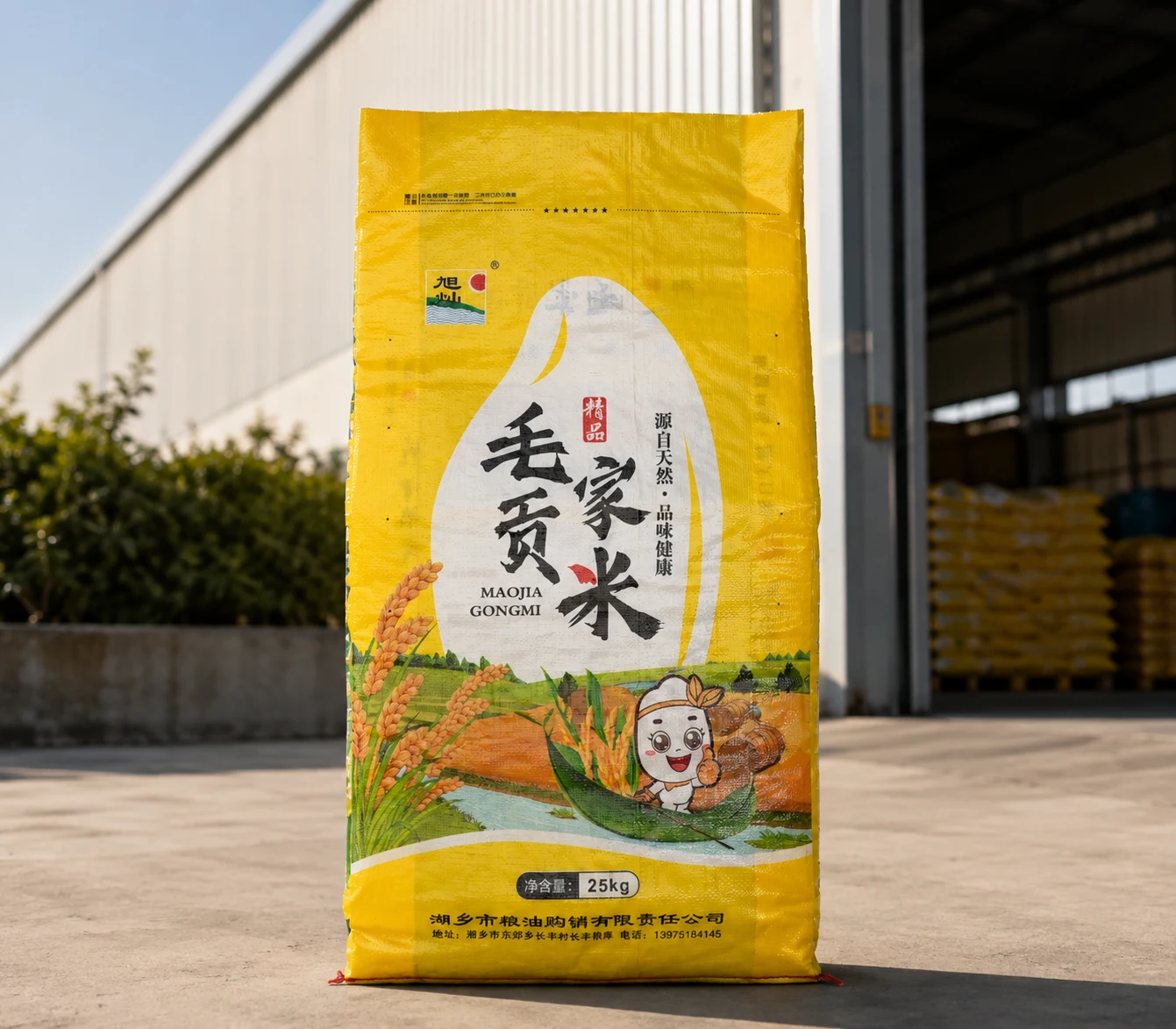
PP woven grain packaging bags |
| Applications |
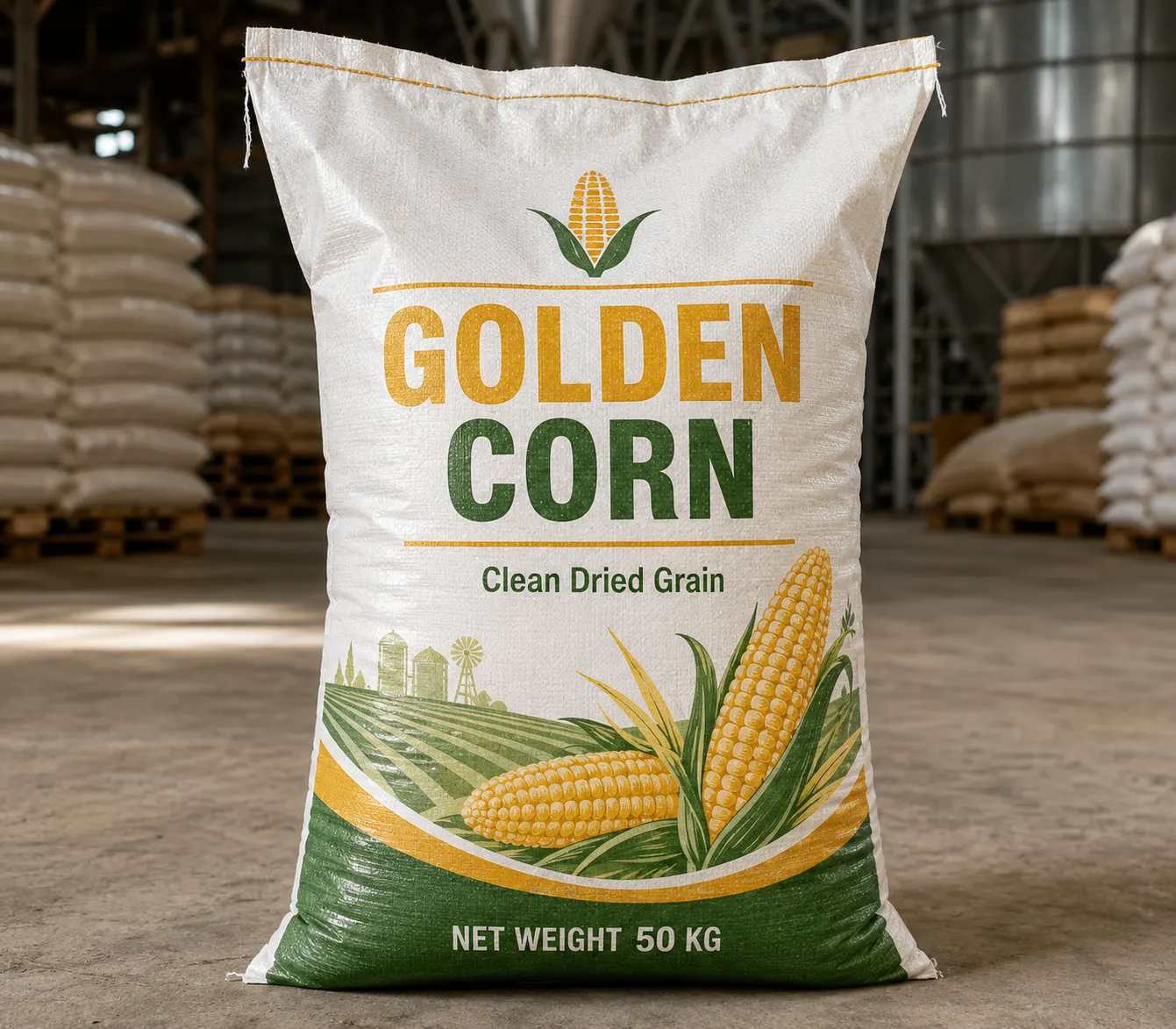
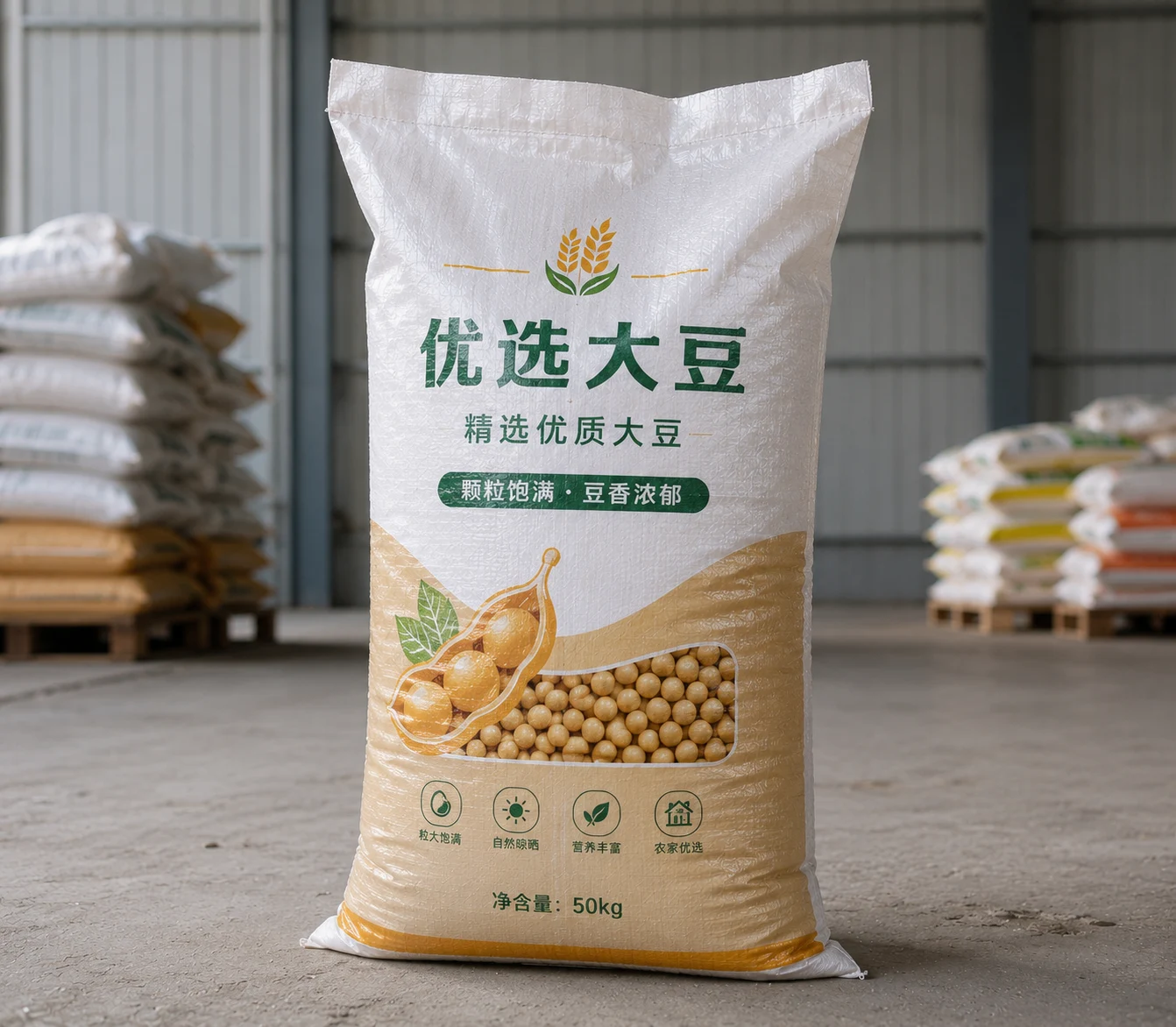
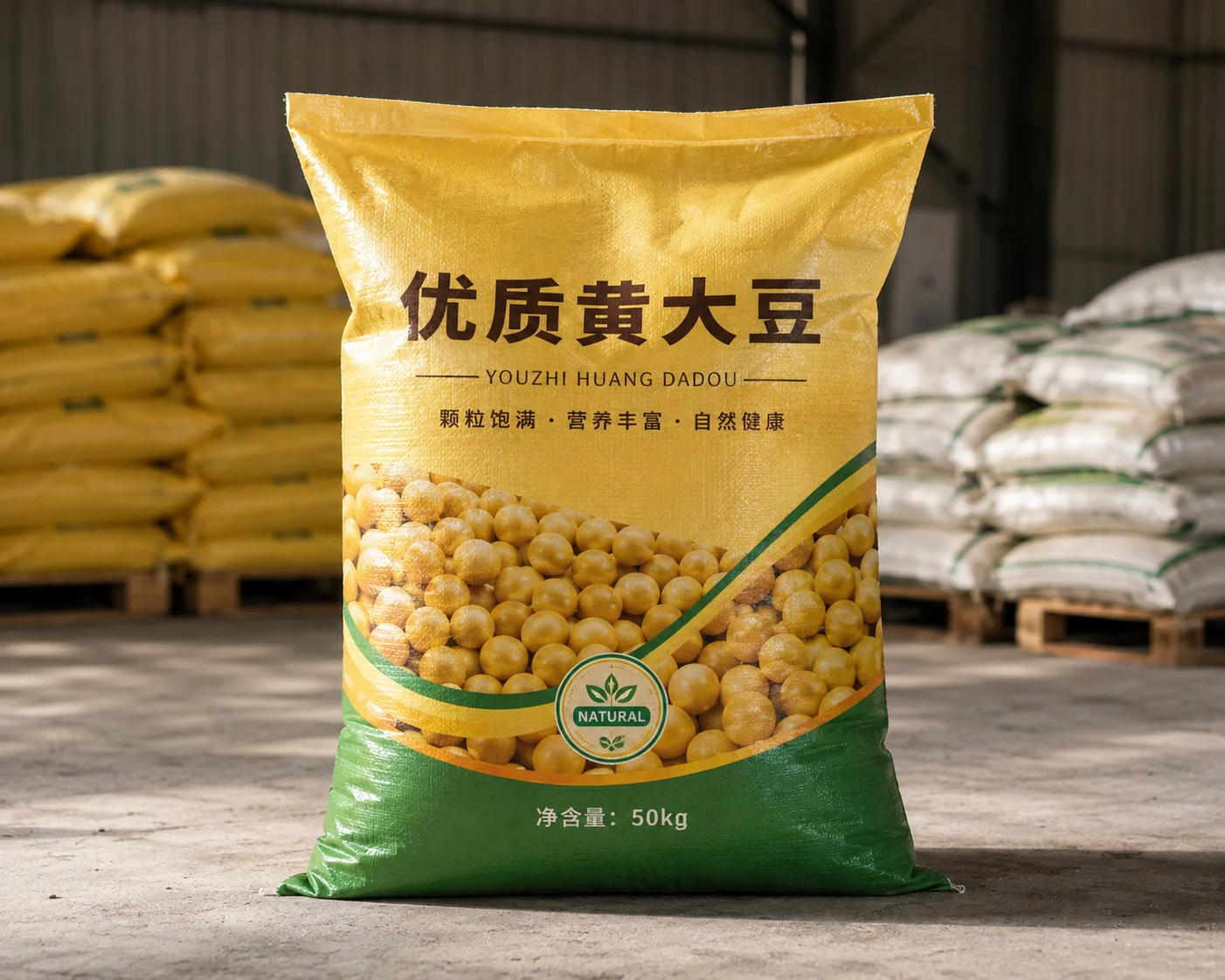
Corn, wheat, soybeans, barley, sorghum, millet, pulses, lentils and agricultural seeds |
| Material |
Woven PP; 100% virgin PP available and commonly recommended for food-related packs |
| Structure |
Plain uncoated, coated, printed laminated or PE-lined |
| Common capacities |
10 kg, 20 kg, 25 kg, 40 kg and 50 kg |
| Fabric weight |
Commonly 55–100 gsm |
| Weaving density |
Commonly 10 × 10, 11 × 11 or 12 × 12; other constructions by review |
| Bag width |
Commonly 35–75 cm |
| Bag length |
Commonly 55–110 cm |
| Fabric colors |
White, natural/translucent, yellow, green, red or another production color |
| Top |
Heat-cut, cold-cut, hemmed or drawstring |
| Bottom |
Single- or double-stitched; sealing tape optional |
| Printing |
Flexographic on plain/coated fabric; laminated printing after artwork review |
| Other options |
Inserted or sewn-in PE liner, anti-slip treatment and UV stabilization |
| MOQ, plate cost and lead time |
Confirmed after size, structure, artwork and quantity are reviewed |
Typical Size Reference
These dimensions are starting points in width × length format. Grain density, headspace, liner and closing method can change the final size.
| Fill weight |
Reference bag size |
Reference fabric weight |
| 10 kg |
About 35 × 55 cm |
55–65 gsm |
| 20 kg |
About 45 × 70 cm |
60–70 gsm |
| 25 kg |
About 45 × 75 cm |
60–75 gsm |
| 40 kg |
About 55 × 90 cm |
65–85 gsm |
| 50 kg |
About 55 × 95 cm |
70–90 gsm |
Information Needed Before Quotation
- Grain or agricultural product and its condition at packing
- Target net weight and bulk density, if available
- Current bag size, filled sample or required dimensions
- Manual, semi-automatic or automatic filling method
- Preferred breathable, coated, laminated or PE-lined structure
- Top, bottom, anti-slip and temporary UV requirements
- Artwork, barcode and required printing method
- Storage route, order quantity and destination
Start with the Crop and Prove the Size
Tell XH Packaging what grain you pack, the target weight and how the filled bags move through storage and distribution. We can compare breathable and more closed constructions, prepare a sample and confirm capacity, closing and stack behavior with the actual crop.
Grain Packaging Bags FAQ
1. Which crops are covered by this grain bag range?
The range covers corn, wheat, soybeans, barley, sorghum, millet, pulses, lentils and agricultural seeds. Bag size and structure depend on crop density, condition at packing and the handling route. Send the crop type, target weight and current bag details.
2. Should corn or wheat use a breathable woven bag?
Use an uncoated woven bag when properly dried grain and the storage plan call for limited airflow. It cannot correct high moisture, unsuitable temperature or poor warehouse ventilation. Provide the grain condition and storage route before selecting the structure.
3. When is a coated, laminated or PE-lined structure useful?
Coating helps control passage through the weave, a laminated surface supports detailed branding, and a PE liner adds a separate inner layer. Humidity, particle size, filling behavior and presentation needs determine the best option. Test the structure with the actual crop and packing line.
4. Can one bag size hold 25 kg of any grain?
Not reliably, because crops have different bulk densities and settling behavior. Corn, wheat and soybeans may need different dimensions at the same net weight. Confirm the size through trial filling or a proven bag sample.
5. Can a barcode be printed on a grain bag?
Yes, if the artwork and bag surface provide suitable contrast, a compliant quiet zone and flat placement. The code should avoid folds, seams and high curvature. Send the barcode file, required size and scanner conditions for a printed-sample test.



 Related