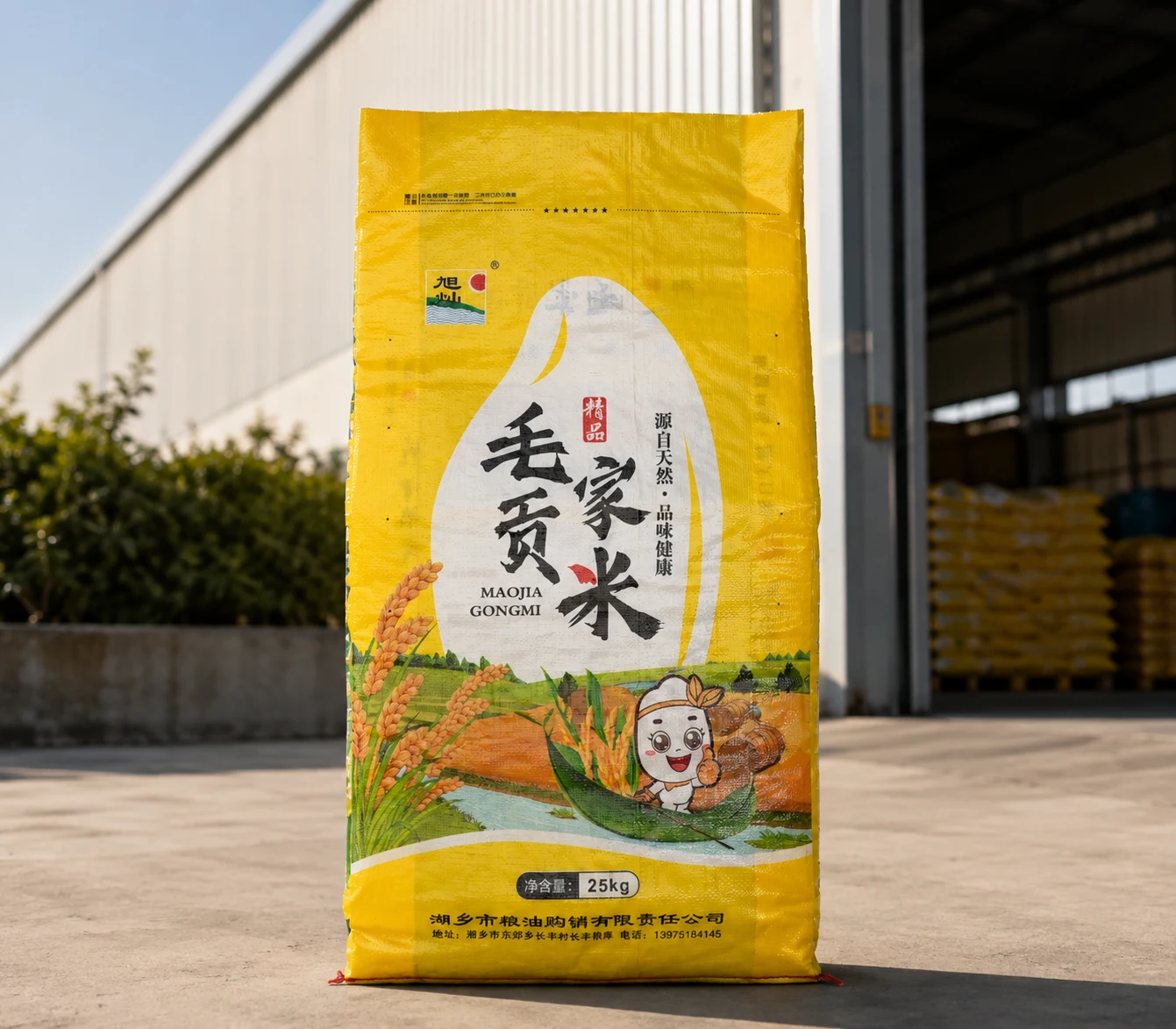
A useful custom bag specification begins with the material being packed. Particle size, powder content, bulk density, sharp edges, moisture sensitivity, product-contact conditions and expected net weight all influence the woven construction. The filling line, mouth shape, closing method, stacking pattern, warehouse conditions, transport route and retail display then determine whether the bag needs a simple woven surface, coating, printed lamination, an inserted liner, a handle, a valve or another project-specific feature.
Capacity cannot be selected from fabric weight or bag size alone. A 3–100 kg filling range is a reference for regular custom bags, not a universal rating. Fabric, weave, seams, bottom, opening, liner, printing or lamination and handling method work as one system. FIBC and other bulk-bag projects require separate engineering. Confirm every new construction with representative product, the intended filling process and an approved sample or packing trial.
Plain and Coated PP Woven Fabric
Plain PP woven fabric suits many dry agricultural, construction and industrial applications where economical strength and straightforward printing are priorities. PE coating can make the woven surface more closed and reduce passage through the weave, but the complete bag should not be described as airtight, leakproof or fully waterproof without order-specific testing. Virgin PP, recycled PP or another agreed formulation may be considered according to appearance, performance, product-contact conditions and destination-market requirements.
BOPP Laminated Woven Bags
BOPP laminated bags combine a woven PP base with printed film for cleaner retail presentation and more detailed graphics. The film can carry product photography, brand colors, instructions, barcodes and different SKU layouts. Lamination direction, film artwork, seam positions, gussets, valve areas and bottom folds must be considered on the dieline. The selected laminate still needs a filled-bag trial for the product and distribution route.
PE Liners and Combined Structures
An inserted PE liner creates a separate inner layer for projects that need additional powder or moisture control. Its length, thickness, opening, venting, position and closing method must work with the outer bag and filling equipment. Outer-bag perforations do not automatically release air trapped inside an unvented liner. When a contact layer or regulatory document is required, identify the exact product-contact configuration and destination standard before quotation.
Top options include straight cut, zigzag cut, hemming, handles, valves, filling spouts and other sample-based structures. The choice depends on whether the bag is filled manually or by machine, how dust and displaced air are controlled, and whether the mouth is sewn, sealed, tied or closed by another approved process. A handle changes the stress path and must be developed together with the bag body, intended load and lifting method.
Bottom options include stitching, compatible heat sealing, block-bottom formats, valve structures, folded edges and gussets. A defined base can improve filling or shelf presentation, while a simpler sewn bottom may suit economical industrial packing. The correct design is the one that fills, closes, stacks and handles consistently with the actual product and equipment.
Flexographic printing is suitable for logos, product names, net weight, handling text and other relatively simple graphics. Gravure-printed BOPP film is used when the project requires detailed images, multiple colors and stronger shelf presentation. The applicable process, color count, plate or cylinder requirement and print area are confirmed after the artwork and bag construction are reviewed.
Artwork must follow the finished bag rather than a flat rectangle. Seams, top hems, valves, gussets, handle attachments and bottom folds can interrupt text or images. Barcodes and QR codes need suitable size, contrast, quiet zones and a reasonably flat location. Provide editable artwork, color references and final code files, then approve the printed sample under the intended scanning conditions before volume production.
Food, Grain, Feed and Agricultural Products
Custom woven bags can be developed for rice, grain, seeds, flour, animal feed and fertilizer. Product density, powder or particle behavior, storage conditions, contact-layer requirements and filling equipment determine the material and closure. Food or feed use must be reviewed against the approved contact configuration and destination-market documentation rather than assumed from the outer woven fabric alone.
Construction and Industrial Products
Cement, dry mortar, sand, building materials, plastic granules, minerals, chemicals and solid fuels can require different weave, moisture control, dust containment, mouth design and stacking behavior. Provide the product safety and handling information needed for packaging review. The bag is a transport and storage component; it should not be used to imply unverified chemical compatibility or hazardous-goods approval.
Retail, Promotional and Specialty Packaging
Pet food, charcoal, rice, shopping goods and other branded products may benefit from BOPP graphics, multiple SKU layouts, handles, gussets and export cartons. The design should balance appearance with filling, carrying and stacking. Large dry-bulk projects can be discussed as separately engineered FIBC solutions rather than treated as a larger version of a regular woven sack.

After receiving the product, target weight, dimensions, material structure, artwork, filling method and order information, XH Packaging can review feasibility and prepare a quotation route. A new design may require an artwork layout, written specification, sample or filling trial. Approval points can include dimensions, fabric weight, mesh, color, print appearance, lamination, liner, opening, bottom, stitching, handle, filled shape, barcode performance and export packing.
The approved specification and signed sample become the order reference for bulk production. MOQ, plate or cylinder charges, sampling requirements and schedule depend on the selected structure, print method, color count, processing complexity, quantity and current production plan.
| Packaging objective | Typical starting point for review |
| Economical dry industrial packing | Plain PP woven fabric, simple flexographic information and a stitched bottom provide a practical starting point for review. |
| Detailed retail graphics | BOPP laminated woven fabric with gravure-printed or reverse-printed artwork supports photographs, multiple colors and coordinated branding. |
| Fine powders or defined moisture-control needs | A tighter weave, compatible coating or inserted PE liner can be evaluated together with the mouth and bottom closure. |
| Machine filling or controlled product flow | A valve, filling spout or customized mouth should be developed around the actual filling nozzle, line speed and closing method. |
| Carrying and shelf presentation | Handles, gussets and square or block bottoms can be reviewed through a loaded sample using the intended goods. |
These configurations are starting points, not automatic recommendations. The final structure should follow the product, equipment, handling route, destination requirements and approved sample.
| Item | Available or Reference Options |
| Product type | Custom PP woven bags; coated woven bags; BOPP laminated bags; valve bags; handled bags; separately engineered FIBC projects |
| Material composition | PP woven fabric, BOPP laminated woven fabric, inserted PE liner or project-specific material combinations |
| Fabric weight | 40–140 gsm, selected according to product, load and construction |
| Bag width | 30–120 cm; special sizes reviewed case by case |
| Bag length | Customized |
| Reference filling range | 3–100 kg for regular custom bags; FIBC projects designed separately |
| Top | Straight cut, zigzag cut, hemmed top, handle, valve, filling spout or other approved custom structure |
| Bottom / structure | Stitched bottom, compatible heat sealing, block bottom, valve structure, folded edge, gusset or sample-based customization |
| Printing | Flexographic printing or gravure-printed BOPP film, including reverse-printed artwork; colors and layout confirmed from approved artwork |
| Mesh | 7 × 7 to 14 × 14, or adjusted according to the approved load and application |
| Printing plate or cylinder charge | Quoted according to printing process, color count and artwork dimensions |
| MOQ | Confirmed according to bag type, material, printing process and processing complexity |
| Lead time | 5–25 days; complex custom orders depend on final sample approval and production scheduling |
| Moisture-control options | PE coating, BOPP lamination, inserted PE liner, moisture-control inner bag or another validated project-specific treatment |
| Packing | Export packing, cartons, pallets or customer-specified packing |
| Applications | Branded packaging, food, feed, fertilizer, building materials, solid fuels, retail shopping and other dry-product packaging |
| Payment terms | Contact XH Packaging’s sales team or authorized distributor for order-specific terms |
Send XH Packaging your product details, target weight, bag dimensions, filling method, preferred structure, artwork and order plan. Our team can review the information, identify a practical starting construction and prepare the quotation, artwork and sample route needed for approval before bulk production.
We provide complete OEM & ODM solutions for PP woven bags, BOPP laminated bags and FIBC jumbo bags. Customized sizes, colors, printing designs and bag structures are available according to different packaging requirements.
Advanced gravure printing and BOPP lamination technologies help customers enhance product appearance and brand value. Multi-color printing, matte/glossy finishes and high-definition graphics are available.
We provide professional packaging solutions for agriculture, food, chemicals, construction materials, feed, fertilizer and bulk cargo industries.
Customized FIBC jumbo bags are available in different loading capacities, lifting designs, top & bottom constructions and safety factors for industrial bulk transportation.
Available bag types include valve bags, block bottom bags, gusset bags, pillow bags, laminated bags and PE liner bags.
From raw materials to finished products, every production process is strictly controlled to ensure high tensile strength, stable quality and reliable packaging performance.